
Governance & Audit Readiness
Cash, checks, and spreadsheets: why manual reconciliation is your district's biggest audit risk
Most K-12 districts already use software for fees, payments, or accounting. The real audit risk isn't a missing system — it's the work that still leaves it: exports, side spreadsheets, and offline reconciliation steps that no one can fully trace later.
Having software isn't the same as finishing the work inside it. A district can run modern platforms for payments, accounting, or fee tracking and still carry serious audit risk — because the operational day doesn't stay inside those systems.
The risk starts the moment staff have to export data, rebuild it in a spreadsheet, email a report for review, or complete a reconciliation step offline. The question auditors actually care about isn't whether a district has software. It's whether staff can finish the work there.
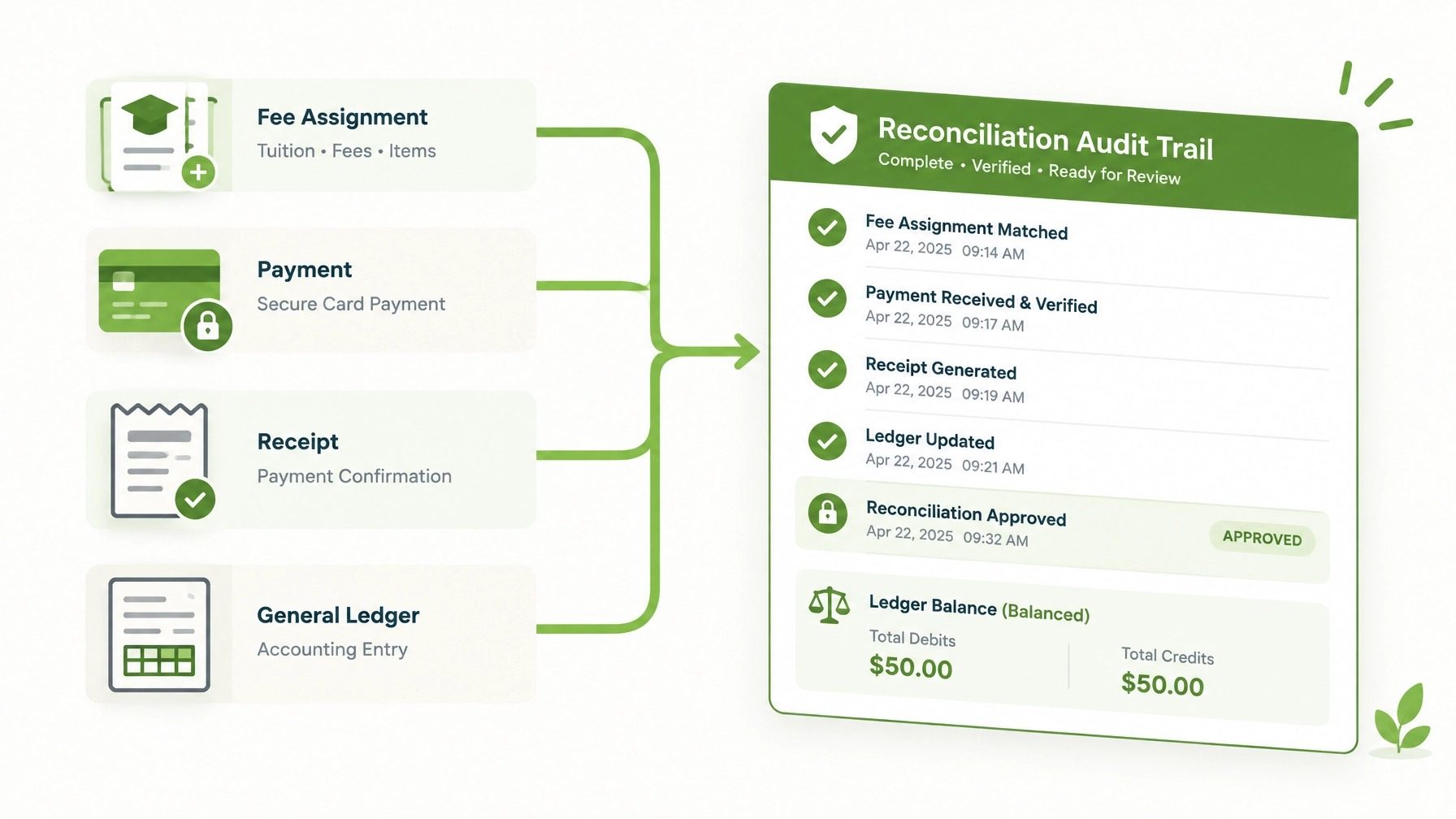
A typical day is where the control gaps begin
Consider a routine sequence that plays out in most business offices every week:
- A fee is assigned in one system.
- A payment is collected through an online portal.
- A staff member exports balances to a spreadsheet to find exceptions.
- Adjustments or waivers get tracked in a shared file.
- A supervisor reviews totals by email.
- Finance staff rebuild the final batch before it goes to the general ledger.
None of that looks unusual. That's exactly why it's risky — every export, side spreadsheet, and offline handoff is another chance for a balance to change outside the governed record, a payment to be misapplied during cleanup, or a reconciliation item to go unresolved between systems. The result is rarely one big unexplained number. It's usually a growing pile of small exceptions someone has to reconstruct later.
Why partial tool coverage still creates audit findings
Auditors want more than a final balance. They want evidence that transactions were recorded completely, reconciled on time, reviewed by the right person, and exported to the general ledger through a controlled process. That's harder to prove when the workflow is split across systems and offline workarounds.
Partial tool coverage creates control gaps. A fee assigned in one system, paid through another, reviewed by email, and reconciled in an exported file becomes harder to defend as a single record — even when each step seems reasonable on its own.
Side spreadsheets become the "real" record. Spreadsheets are fine for analysis. They become a liability when they quietly hold the authoritative detail for adjustments and reconciliations. A side file usually can't show who changed a value, when, why, or whether it matches the final export.
Out-of-system reconciliation delays visibility. When reconciliation happens outside the system, exceptions surface late and are harder to trace back to the original transaction — by which point the file has changed, the adjustment lives only in an email thread, and the batch is already headed to the GL.
The fix: one connected record from fee assignment to GL export
School district accounting software should do more than accept payments — it should connect the full financial workflow so nothing has to leave the system to get finished:
- Assign the fee to the correct student, grade, school, group, or program, with accounting codes attached.
- Notify the family with a clear amount owed, due date, and payment method.
- Record the payment — online, check, cash, partial payment, or installment plan — against the correct obligation.
- Reconcile exceptions such as unallocated payments, refunds, voids, and waivers through a defined workflow.
- Review the current position: outstanding balances, activity, and unresolved items in one place, without combining spreadsheets.
- Approve and export to the general ledger through a controlled, lockable batch.
- Preserve the record with an audit trail of users, timestamps, adjustments, and approvals.
That's the difference between collecting payments and actually managing financial operations.
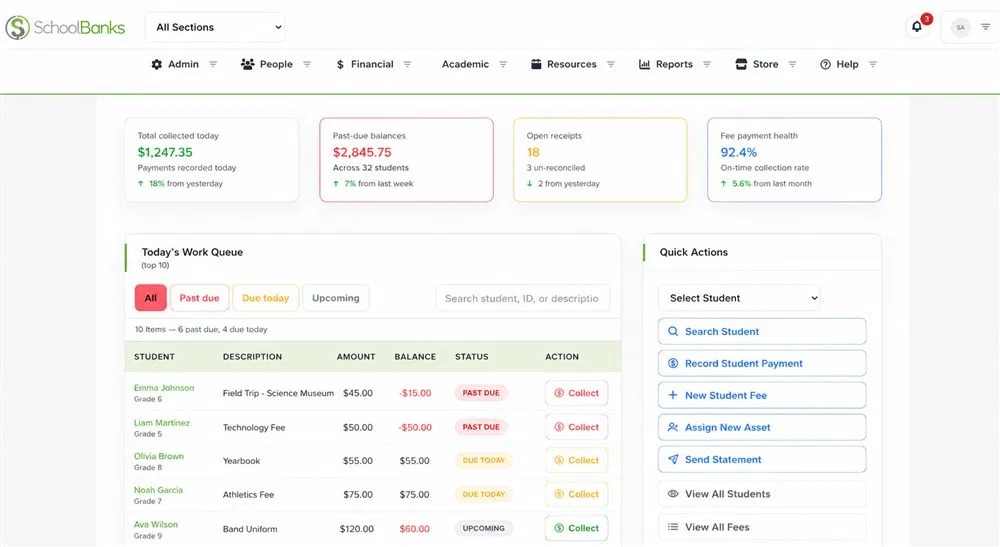
What a connected workflow changes for each role
A connected record doesn't just reduce audit risk — it reduces the daily work of re-entering, exporting, and reinterpreting the same information.
- Business office staff reconcile to the penny by reviewing payment activity against assigned fees and accounting exports from one record, catching exceptions while they're still manageable.
- Finance directors see school-level and district-level collections and reconciliation status, and can drill into the underlying record when a number needs explaining.
- Principals and school administrators work from the same record instead of building separate local tracking sheets.
- Families get a clearer payment experience — balances, history, and payment options in one place — which means fewer basic questions land back on staff.
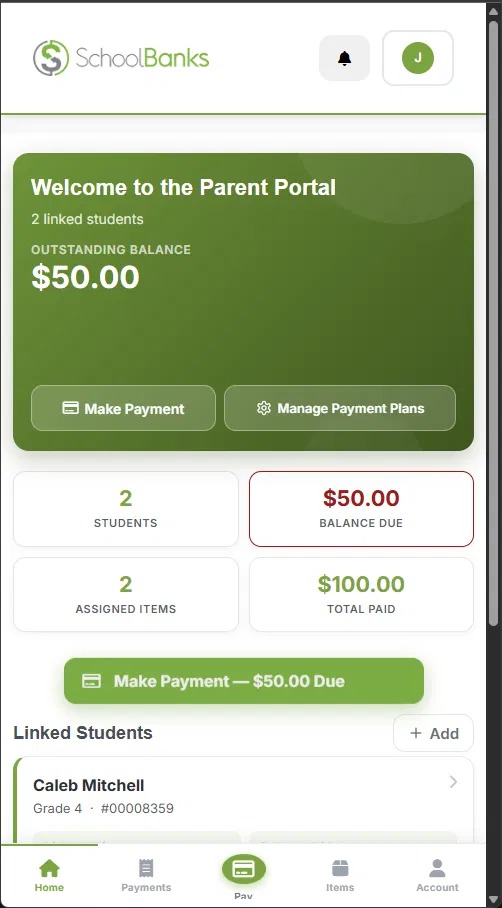
Audit readiness is a year-round habit, not a spring project
Audit prep works better as part of daily operations than as a scramble that starts when auditors ask for documentation. A district should be able to answer, at any point in the year: What fee was assigned, and by whom? What payment was received, and how was it applied? Was it adjusted, refunded, or voided — and who approved it? Which records were in the accounting export, and is that export locked?
The goal isn't to assume every workaround becomes a finding. It's to find out where your district still depends on exported files, email review, or spreadsheet reconstruction to finish work that should stay inside the system.
Start with one connected workflow
You don't need to replace every financial process at once. Most districts can start with a single connected thread: fee assignment, payment intake, reconciliation, and approved GL export. Once that's reliable, it becomes the foundation for stronger reporting, parent communication, petty cash, and asset accountability.
SchoolBanks connects fees, payments, reporting, accounting workflows, notifications, and audit controls in one system, so staff can complete fee assignment, payment intake, reconciliation, approvals, and GL export without leaving it to finish the work.
Use the K-12 Audit Readiness Checklist to see where your records are already clear, or book a SchoolBanks demo and we'll walk through your reconciliation workflow to show exactly where work is still leaving the system.